It might sound like a stretch to think voting behavior and political divides in one of the South’s most consequential swing states could be explained by barbecue sauce.
But that’s exactly what we found in North Carolina.
In both barbecue sauce and politics, North Carolina’s “split personality” is rooted in centuries-old settlement patterns and evolving demographics. Barbecue here is a source of pride, and, like taste preferences nationally, voters in the Tar Heel State — or, shall we say, the Sauce State — are divided.
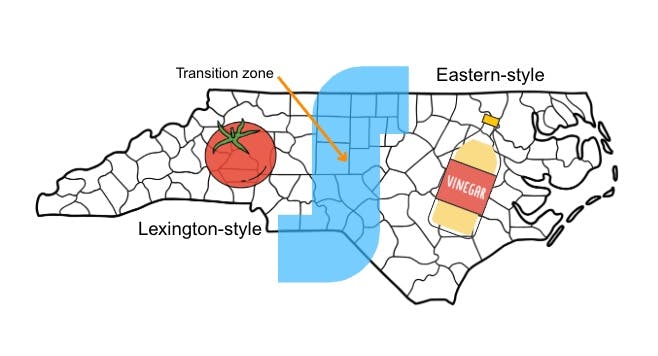
The so-called “barbecue boundary” is more than a culinary cleave; it reflects the state’s foundational divisions. Western North Carolina, settled predominantly by German and Moravian immigrants, developed the Lexington style of barbecue with tomato-based sauces.
Then there’s Eastern North Carolina, settled earlier by English and Scots-Irish immigrants, known for their whole-hog barbecue and vinegar-based sauces. These regional distinctions mirror broader cultural and political divides, with the western “Trumpian Highlands” standing apart from the more moderate “Faux South” and gridlocked “Sweet Tea Suburbs” of the east.
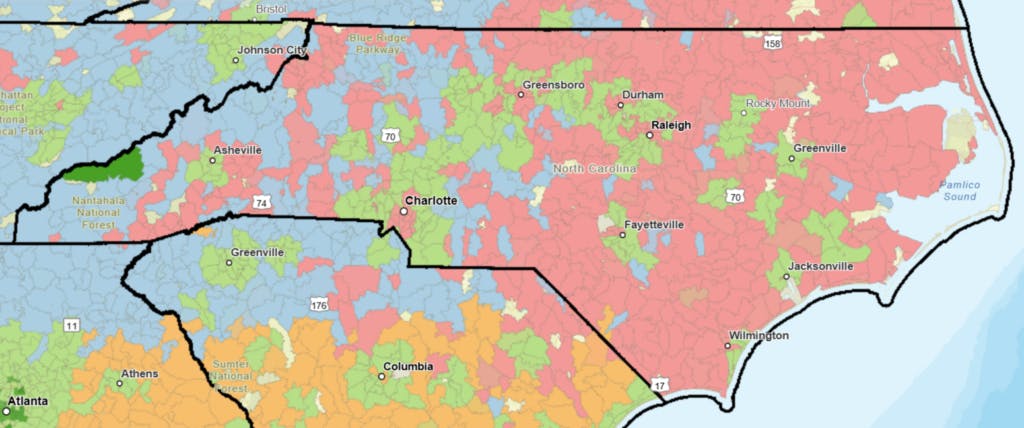
Our analysis shows a political patchwork of those Trumpian Highlands in the west reflecting the deep-red, Appalachian-rooted strongholds that have surged rightward in recent years, and the Faux South in the east, which is a concentration of moderate, Mid-Atlantic-influenced counties shaped by trade routes rather than mountain and lowland plantation culture. Mixed in are the modern Sweet Tea Suburbs, encompassing the politically gridlocked, middle-class communities ringing cities like Raleigh and Charlotte.